The true cost of business as usual
Every business builds up habits, workarounds, and rules that nobody has had time to question. Over the years they turn into operational debt. An analyst looks at the numbers and processes behind them and shows you what they cost in money, time, and lost opportunities.
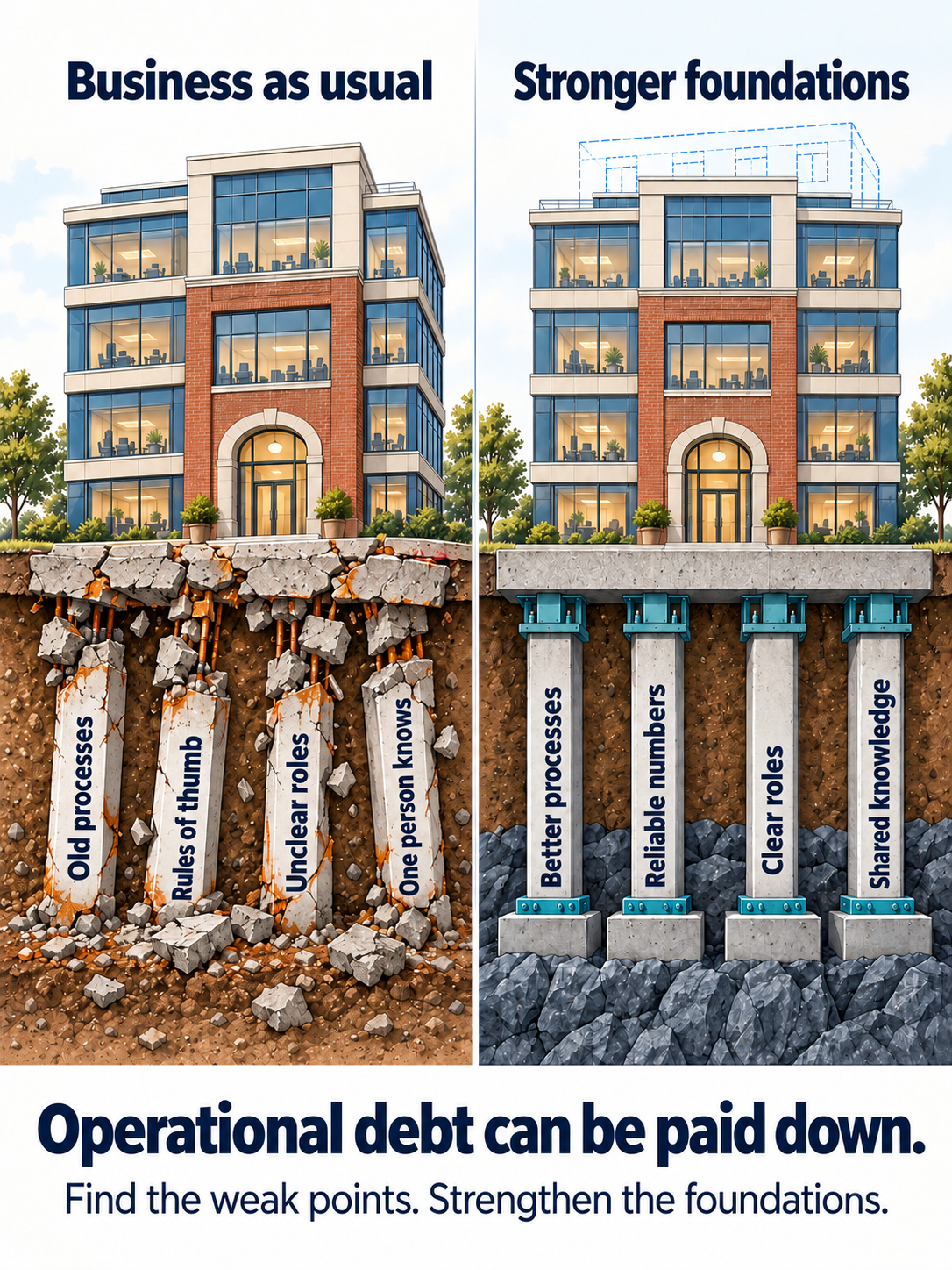
Does any of this sound familiar?
- The same questions keep landing on your desk.
- Sales keep growing, but profit doesn’t keep pace.
- Simple jobs take more steps than they should, and nobody remembers why.
- Two reports answer the same question differently.
- Only one person really knows how a key process works.
- You can’t say with confidence which products, customers, or jobs earn their keep.
- Buying decisions rest on rules of thumb, or on whoever happens to be doing the buying.
How it happens
Picture Bob. He joined early and set up how orders get approved, how work gets tracked, or how the month-end numbers come together. It worked well for a company that size. Bob left a few years later, and the company has grown several times over since. His process is still there, and the bigger the company gets, the more it costs. Nobody had time to look.
What an analyst does
While large companies keep whole teams for this work, a company of any size can bring in the same close look for one defined piece of work. An analyst can:
01
Review your records and follow how work moves through the business
02
Talk with the people doing the work, where that helps
03
Report back in plain language: what’s happening, what it costs, and what to address first
Where an analyst can look
Operations
Where work stalls, repeats, or depends on one person.
Business & data
Numbers scattered across systems, pulled together into answers you can trust.
Sourcing & purchasing
Whether buying decisions reflect what a purchase really costs.
Online & marketplace sales
What your products really earn after returns, fees, and operating costs, whether you sell on Amazon or elsewhere.
What a closer look can reveal
Finding 01
The full picture.
Adding overhead to the numbers showed one business what it really earned, so decisions could rest on real profit.
Finding 02
A small assumption, a big gap.
One business guessed at a routine cost. Measured properly, it was more than four times higher, enough that some approved deals would have missed the company’s own profit target.
Finding 03
Real costs, better buying.
Counting the true cost of handling returns in buying decisions helped every purchasing dollar earn 15% more profit.
Examples from prior analysis and operating work. Results vary by business.
Where do I start?
Start with whatever you keep circling back to. A first conversation is a chance to talk it through and see whether an analysis is the right next step.
Good places to begin:
- A process you keep working around
- A decision you can’t make with confidence
- Numbers you don’t quite trust
- A plan you keep putting off
- A hunch that something costs more than it should
If an analysis fits, it’s scoped around your question. If it doesn’t, you’ll know that too.
Start a conversation.
Tell me what you would like to understand or improve.